hs, ms
Environmental monitoring for quality assurance
What is the importance of monitoring for pathogens and cleanliness in lab spaces?
Professionals in this pathway strategically plan and build spaces where precision, safety, and regulatory compliance are critical, from pharmaceutical manufacturing plants to research laboratories and biotech facilities.
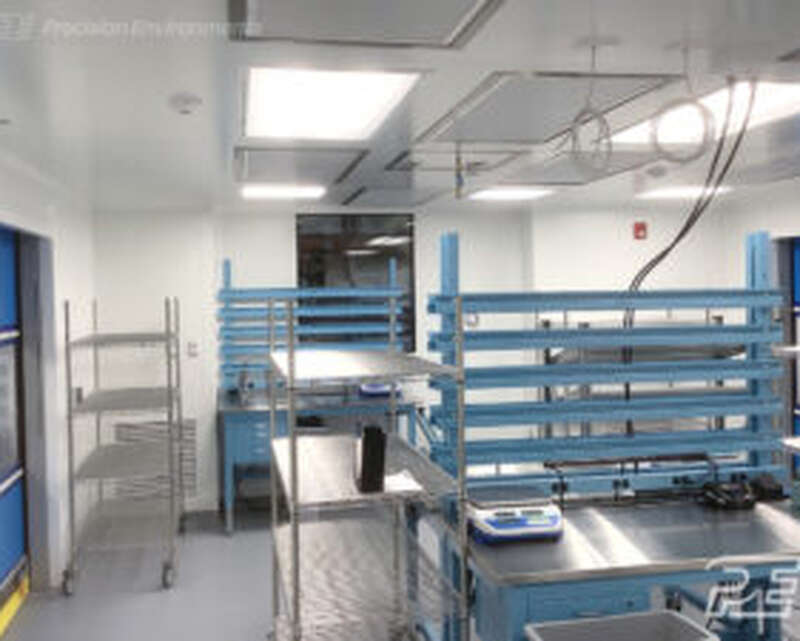
Professionals in this pathway strategically plan and build spaces where precision, safety, and regulatory compliance are critical, from pharmaceutical manufacturing plants to research laboratories and biotech facilities.
Unlike general construction, life sciences facilities require specialized expertise to meet OSHA standards, governmental regulations, and stringent safety requirements. These projects demand sterile, secure environments with unique features: specialized infrastructure, chemical storage systems, clean rooms, advanced HVAC (heating, ventilation, air conditioning or circulation), backup power, climate control, extended ceiling heights, fireproof systems, energy-efficient designs, and biosafety containment.
These pathways connect lab safety, homeostasis, sustainability, and biotechnology concepts to real-world facility design and construction where precision, safety, and environmental responsibility are essential.
This pathway helps students see science as applied, interdisciplinary, and socially relevant. It strengthens inquiry skills, reinforces core biological and environmental concepts, and provides authentic examples of how scientific understanding shapes the safe spaces where research, medicine, and biotechnology happen. It reinforces Ohio standards by connecting core science ideas: systems, energy, structure and function, safety, and human impact, to authentic, real-world applications.
What is the importance of monitoring for pathogens and cleanliness in lab spaces?

What are the careers within the life sciences? How do those careers work together to solve health-related problems?
Why are SOPs important in biotechnology? What components are needed for an SOP?